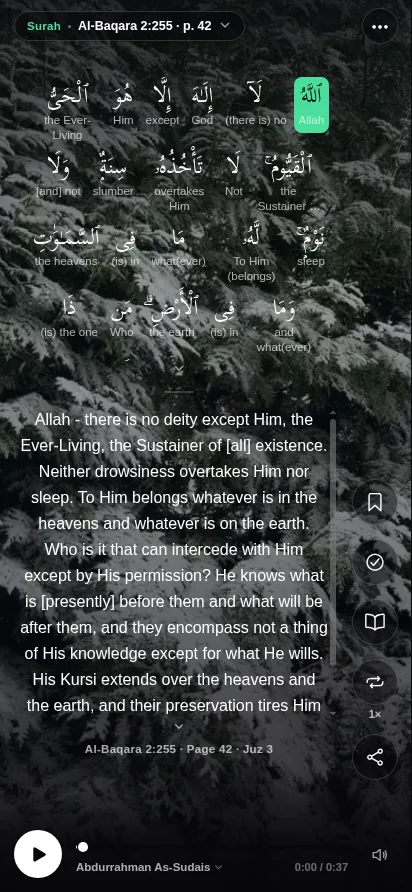
An ayah fills the screen, a qari recites it, and each word lights as it is said. Swipe for the next. The scroll already has an hour of your day. This gives it to the Quran.
Opens in the browser. Nothing to install, no sign-up.
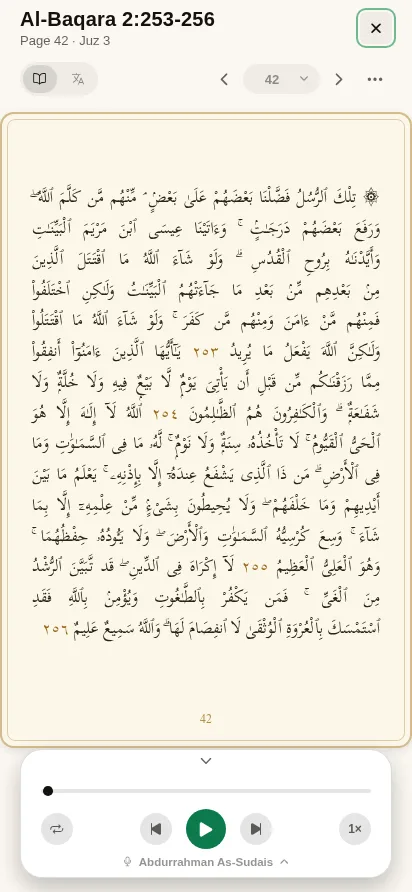
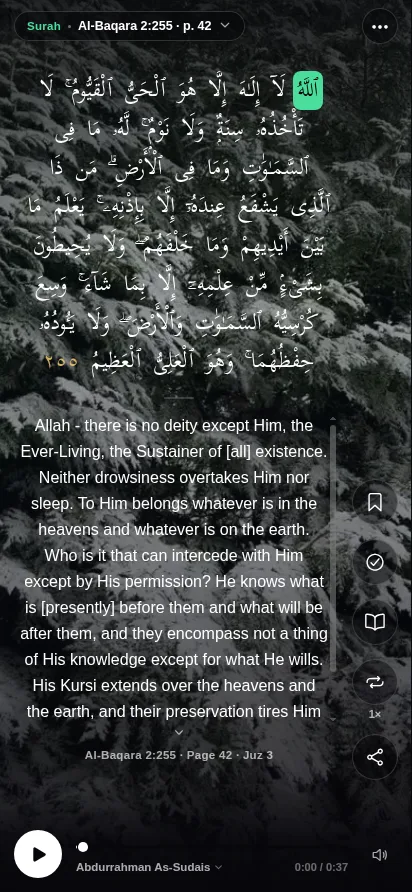
The feed
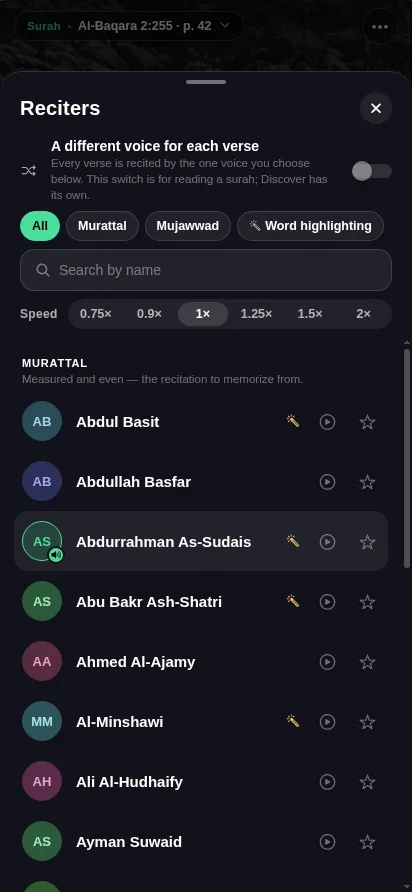
A short-video feed takes an hour a day from most of us without a decision ever being made. The format is not the problem — what is on it is. Here it carries the Quran: one ayah filling the screen, recited, each word lighting as it is said, and a swipe for the next. Hifz is repetition, and repetition needs something you come back to without deciding to.
In the feed
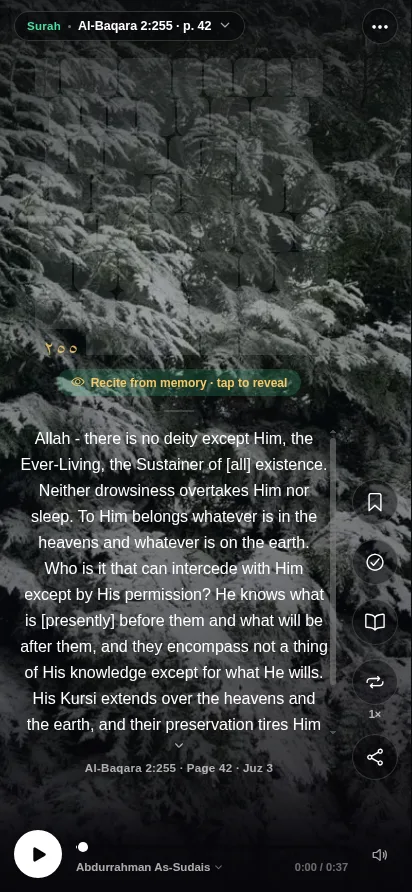
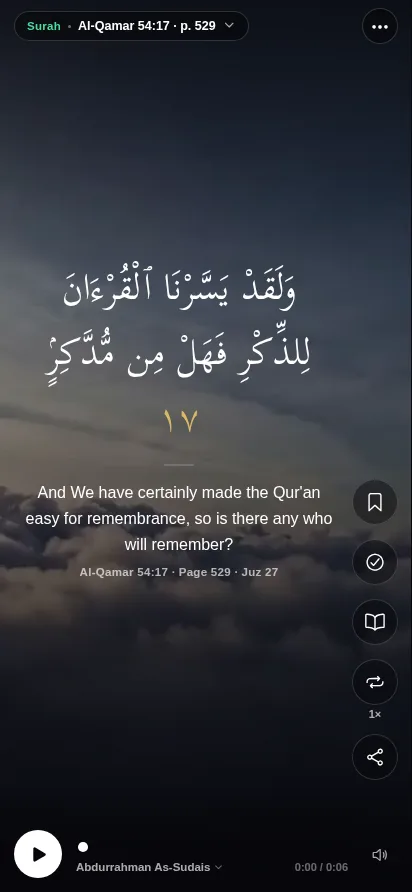
“And We have certainly made the Qur’an easy for remembrance, so is there any who will remember?”
Al-Qamar 54:17
Your progress
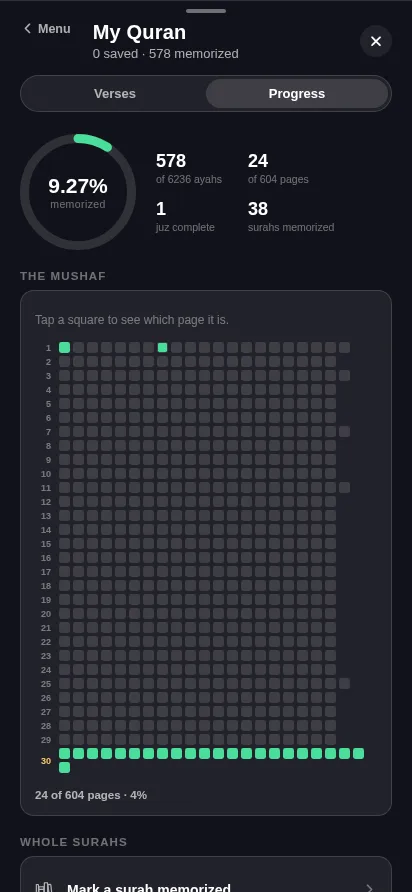
One square per page, thirty rows for thirty juz. A page you hold is filled; a page part-done stands part filled. It is the plainest answer to how much have I memorised — and the best reason to sit down today.
How to use it
No setup to get through. Everything below can be changed later.
It runs in the browser. On a phone, Add to Home Screen: its own icon, full screen, offline.
Twenty qaris and thirty-five translations, with the app itself in twelve languages. Star the ones you keep coming back to.
A page in the mushaf or a surah in the feed. Set the repeat, recite after the qari, then hide the words and test yourself.
An ayah, or the whole page. The map fills in and tomorrow's muraja'ah is set for you.
Everything else
The ayah is hidden and revealed a word at a time as you recite. It is yours when it comes before the word does.
Work a run of ayat: one at a time, joined end to end, or built up an ayah per pass — the way it is taught.
Sabaq, sabqi and the dawr through everything you hold — five, ten or twenty pages a day.
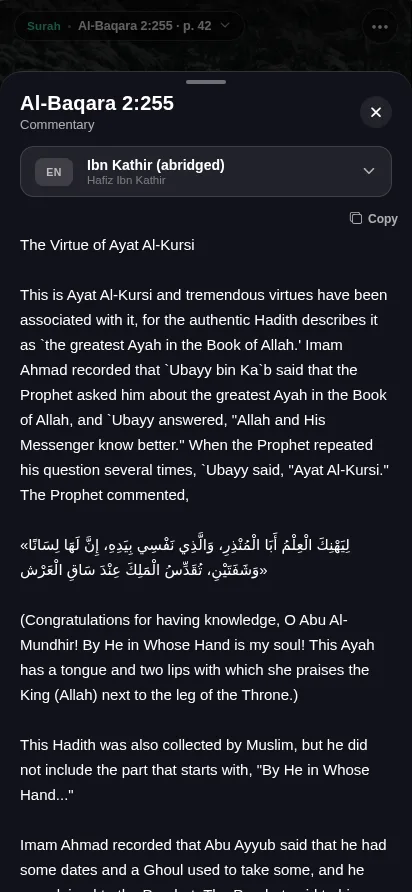
Twenty tafsirs, opened on the ayah you are reading rather than in a screen you have to navigate twice.
Any ayah becomes a picture or a vertical video — the recitation, the words lighting, the meaning underneath.
The whole Arabic text ships with the app. A tunnel or a plane changes nothing.
Three grounds, and the mushaf keeps its paper in all of them.
Space, arrows and a shortcut for everything that matters. On a desk this is a reader, not a phone app stretched wide.
Nothing to sign up for, nothing tracked, nothing sold. Your progress stays on your device.
The mushaf
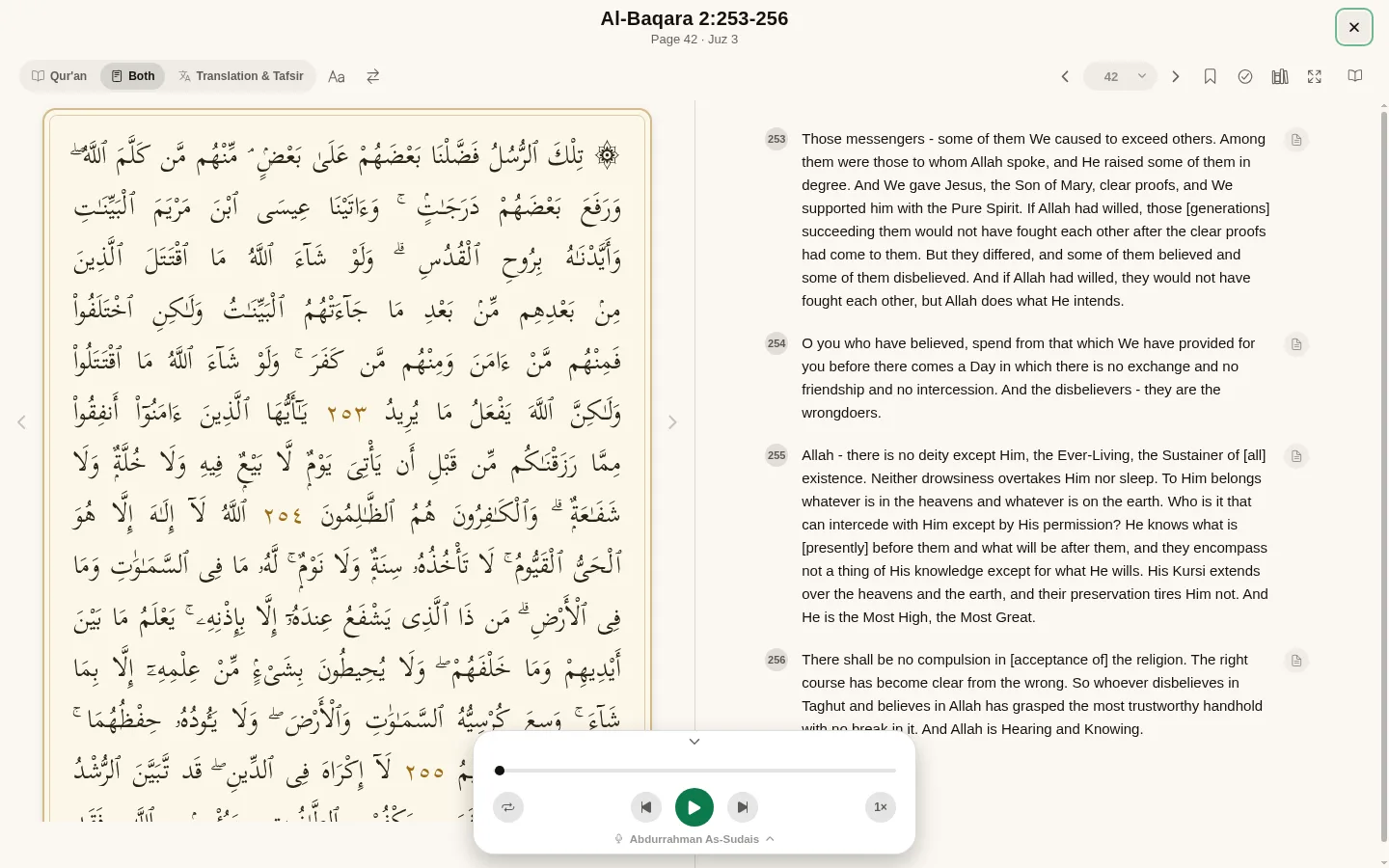
Hifz is visual: you remember where an ayah sits on the page. All 604 pages are set the way the printed Madani mushaf sets them — fifteen lines, margin to margin, at whatever size fills your screen.
On a desk
A wide screen is the one place a mushaf can sit beside its translation without either giving anything up. Arrows in the margins turn the leaves; so does the keyboard.
Questions
Free — no paid tier, no trial, no adverts — and no sign-up. Your hifz is stored by your browser on your device, not on a server, so it does not follow you to another device and clearing your browser data clears it.
All 6,236 ayat and every mushaf page ship with the app, offline from your first visit. Translations, word meanings and recitations are kept as you use them, so anything you have opened works with no signal.
Not yet — one may come. For now it is a web app, which is most of the way there already: open it, then Add to Home Screen on iPhone or Install in Chrome, and it has its own icon, opens full screen and works offline, on a phone and on a computer both.
Twenty, murattal and mujawwad — Mishary Alafasy, Mahmoud Al-Husary, Al-Minshawi, Abdul Basit, Abdurrahman As-Sudais, Saud Ash-Shuraim and others — ten with the word timings that drive the highlight. Thirty-five translations, twenty tafsirs, and the app itself in twelve languages.